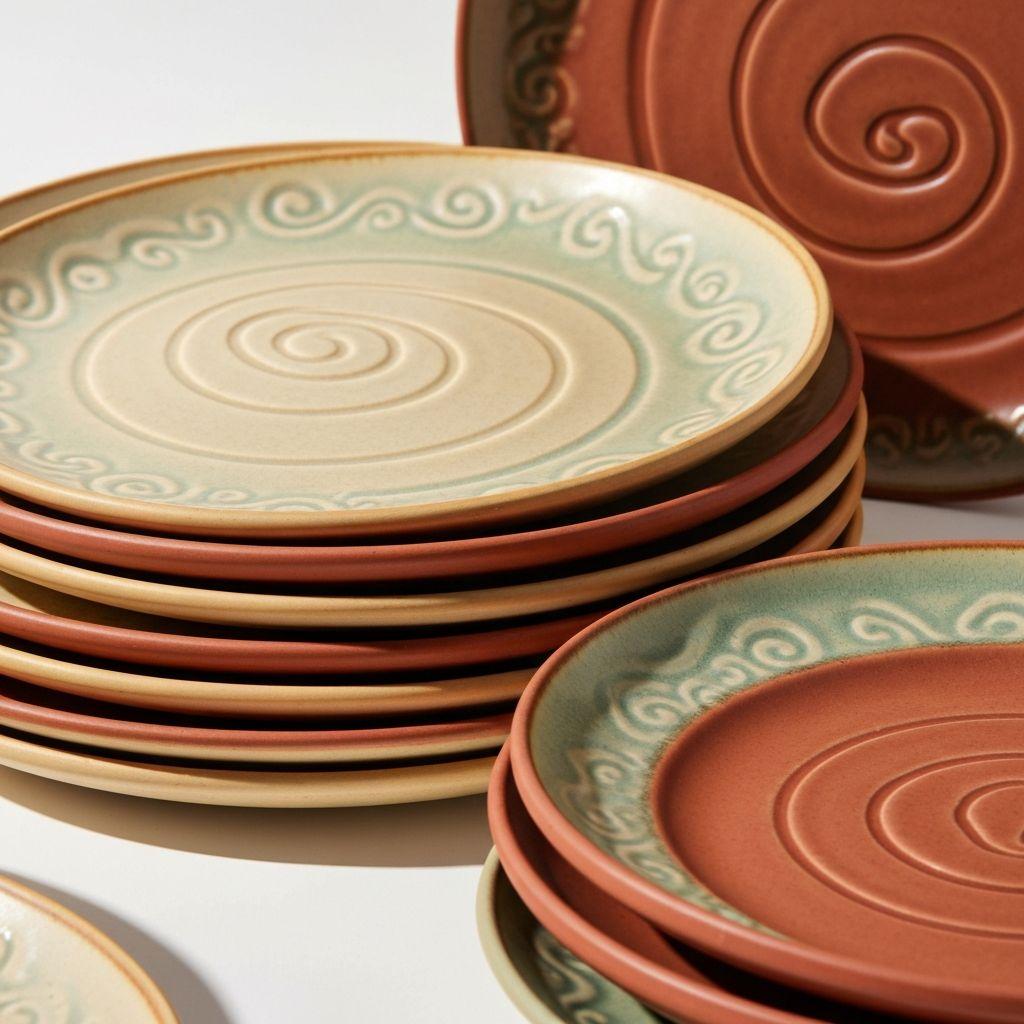
Start with the plate shape
Coupe plates have a gently rising edge and a modern silhouette. Rimmed plates separate the food well from the edge and can feel more traditional. Low bowls are useful for pasta, curries and saucy dishes, but they do not replace a flat dinner plate for everyone.
Look at the usable center, not only the outside diameter. A wide decorative rim can make a 10.5-inch plate hold less food than expected.
Useful sizes for a real cupboard
A typical dinner plate is roughly 10 to 11 inches across; salad and side plates are commonly around 7 to 9 inches. Those are only reference points. Measure shelf depth, dishwasher rack spacing and your microwave turntable.
- Choose enough flat area for your usual meals
- Use 8- to 9-inch plates for lunch or smaller portions
- Check stack height if storage is tight
- Prefer smooth foot rings that protect the plate below

Glaze, rims and utensil marks
Dark matte glazes can show pale utensil transfer; very light glossy glazes can reveal scratches or staining. Neither issue is guaranteed, so read maker guidance for the exact collection.
A thin exposed rim looks beautiful but is the first point to meet a sink or neighboring plate. For fast family stacking, a rounded fully glazed rim may be the calmer choice.
How to make stoneware plates last
Load plates with space between them, avoid sliding stacks across one another, and do not move a cold plate directly into a hot oven. Retire a plate with a sharp chip, deep crack or unstable wobble from food service.
A practical shortlist by use case
These links open broad Amazon searches, so you can compare current availability and verify each product’s care details.
Best everyday shape
A 10–10.5 inch coupe plate with a modest lip and smooth glazed foot.
Best for pasta and sauces
A low stoneware dinner bowl with enough flat center for plating.
Best for replacements
Open-stock plates sold in sets of four, with matching sides available separately.
Affiliate links · As an Amazon Associate I earn from qualifying purchases.
Frequently asked questions
What size stoneware dinner plate is best?
For many homes, 10 to 10.5 inches is versatile, but cupboard depth, dishwasher spacing and the amount of flat eating area matter more than a standard number.
Why do stoneware plates get gray marks?
Some marks are metal transfer from flatware rather than scratches through the glaze. Follow the maker’s cleaning instructions and test any cleaner on a hidden area first.
Is stoneware dishwasher safe?
Many glazed stoneware pieces are dishwasher safe, but the maker’s care label is the final authority. Hand washing is gentler on matte, metallic, hand-painted or crackle glazes.
Can stoneware go in the microwave?
Often yes, when the manufacturer marks it microwave safe. Do not microwave pieces with metallic decoration, and avoid sudden temperature changes that can stress the clay body or glaze.
Is stoneware oven safe?
Only use a piece in the oven when its product instructions give a temperature limit. Dinnerware and bakeware may both be stoneware, but they are not automatically interchangeable.