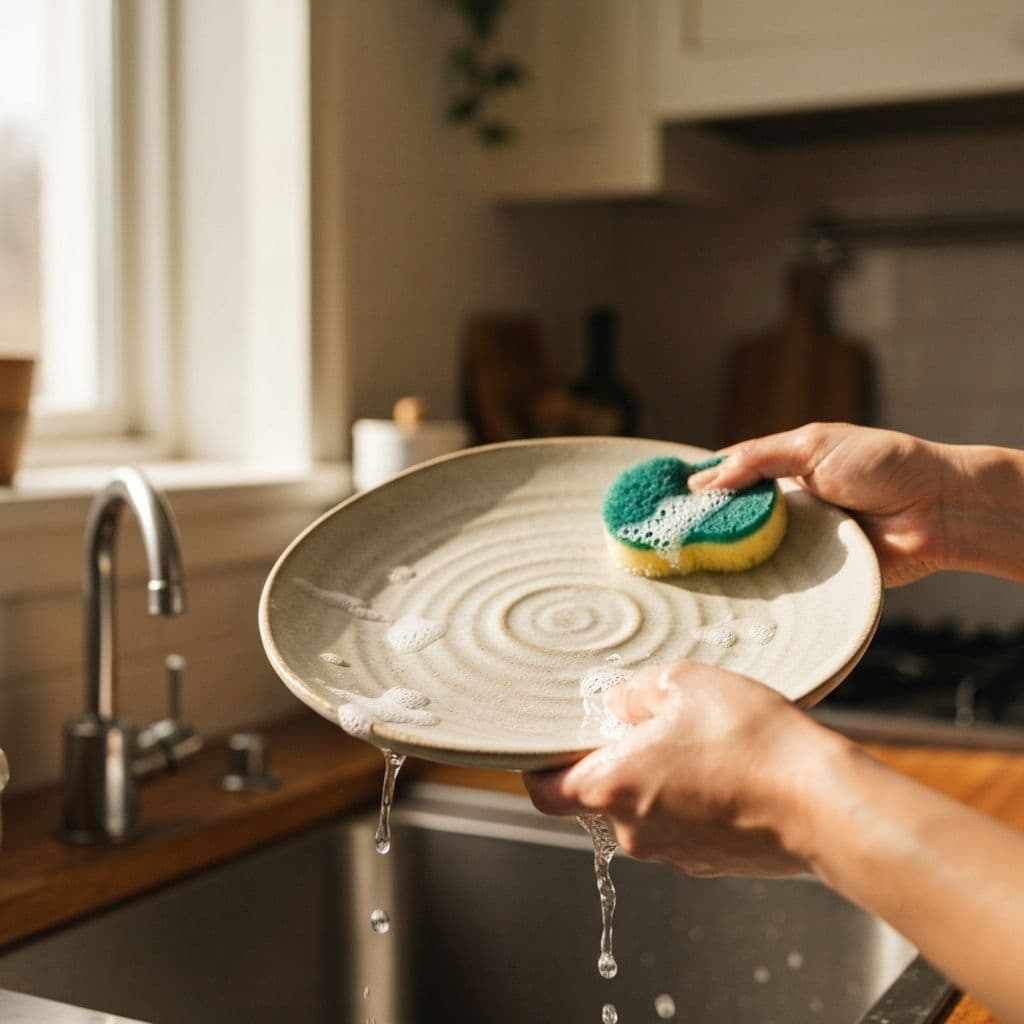
Wash according to the exact care label
Dishwasher-safe stoneware still benefits from space between pieces so rims do not knock together. Keep tall items clear of spray arms. Hand wash metallic, crackle, hand-painted or maker-specified finishes.
Stack without grinding the glaze
Lift plates instead of sliding them. If rough foot rings touch glazed surfaces, place thin felt or paper separators between rarely used stacks. Do not build a stack too heavy to lift safely.
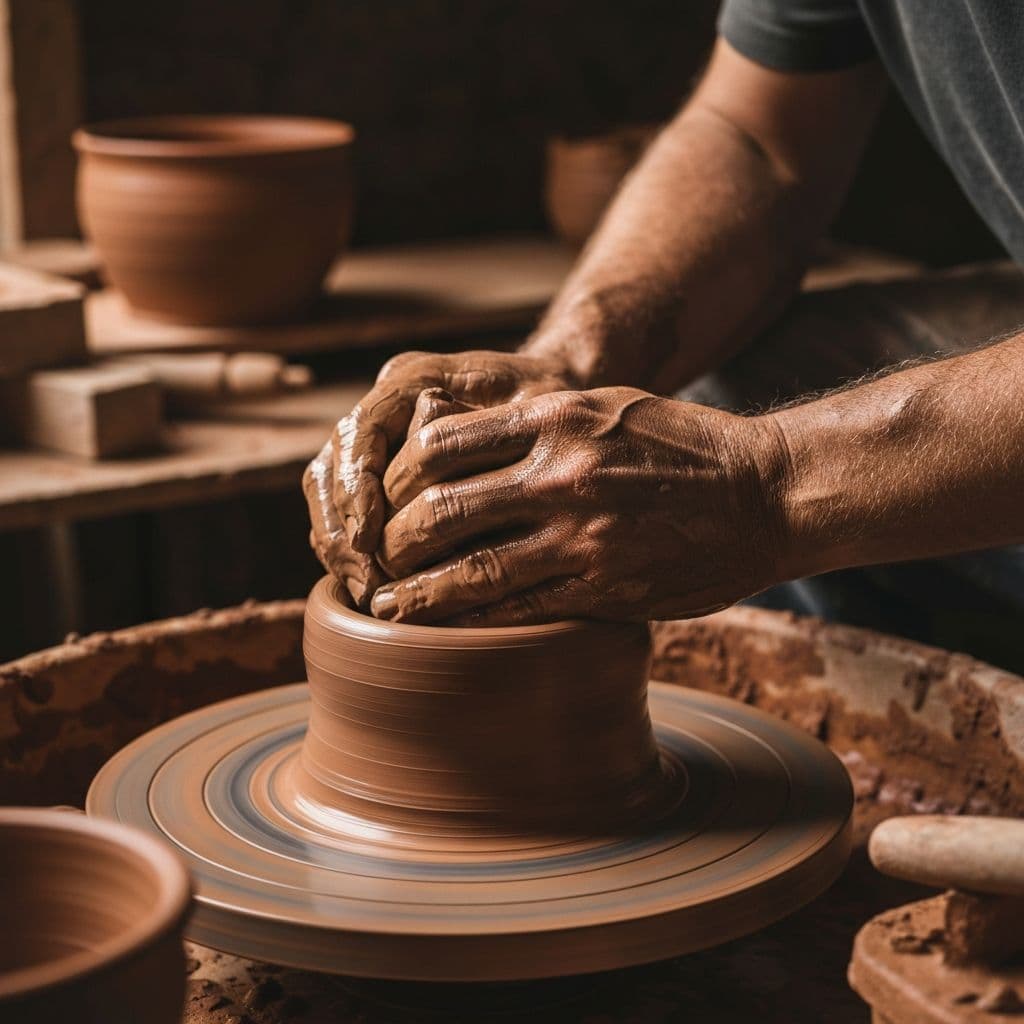
Treat marks gently
Gray lines can be metal transfer rather than a cut through the glaze. Start with the maker’s approved cleaner and a non-abrasive cloth. Avoid aggressive scouring powders unless the manufacturer recommends them.
Avoid thermal shock
Do not move stoneware directly from freezer to hot oven, place a hot dish on a cold wet surface or pour boiling liquid into a very cold piece unless the maker explicitly approves that use.
Know when to retire a piece
Stop using dinnerware with sharp chips, deep cracks, active glaze flaking or a base that has become unstable. Decorative reuse is safer than risking a cut or further breakage.
Frequently asked questions
How do I remove utensil marks from stoneware?
Use only a cleaner and method approved by the maker. Begin gently; some marks are surface metal transfer, while true scratches cannot be cleaned away.
Can chipped stoneware be repaired for food use?
A decorative repair does not automatically restore a food-safe, dishwasher-safe surface. Retire sharply chipped or cracked pieces from food service.
Is stoneware dishwasher safe?
Many glazed stoneware pieces are dishwasher safe, but the maker’s care label is the final authority. Hand washing is gentler on matte, metallic, hand-painted or crackle glazes.
Can stoneware go in the microwave?
Often yes, when the manufacturer marks it microwave safe. Do not microwave pieces with metallic decoration, and avoid sudden temperature changes that can stress the clay body or glaze.
Is stoneware oven safe?
Only use a piece in the oven when its product instructions give a temperature limit. Dinnerware and bakeware may both be stoneware, but they are not automatically interchangeable.