Stoneware, in plain English
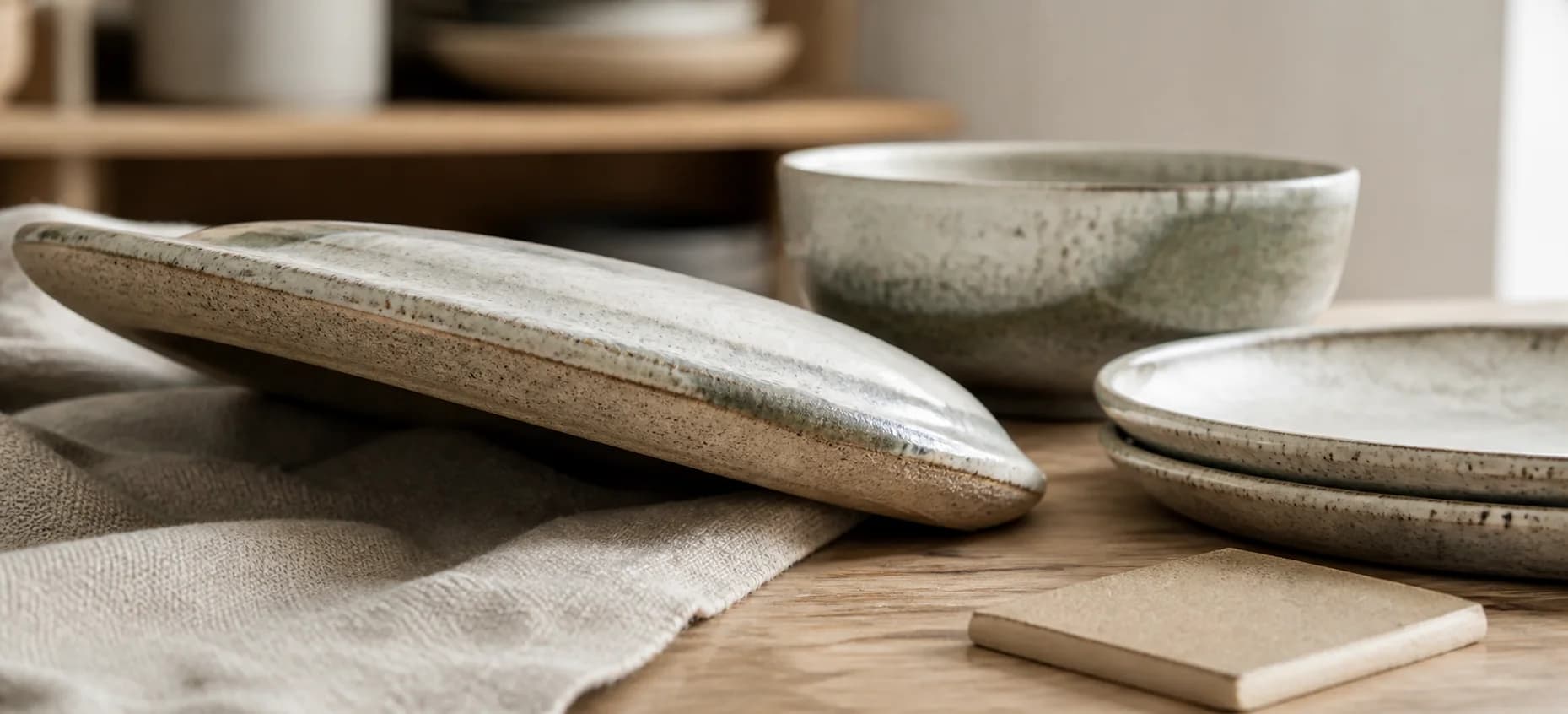
Stoneware is a family of ceramic ware made from clay that is fired until the body becomes dense, strong and low-porosity. In dinnerware, that usually means plates and bowls with a substantial hand feel, opaque clay body and a glazed eating surface.
The name describes the material and firing result, not one particular style. Stoneware can be crisp and modern, rustic and speckled, glossy, matte, wheel-thrown or factory made.
How stoneware dinnerware is made
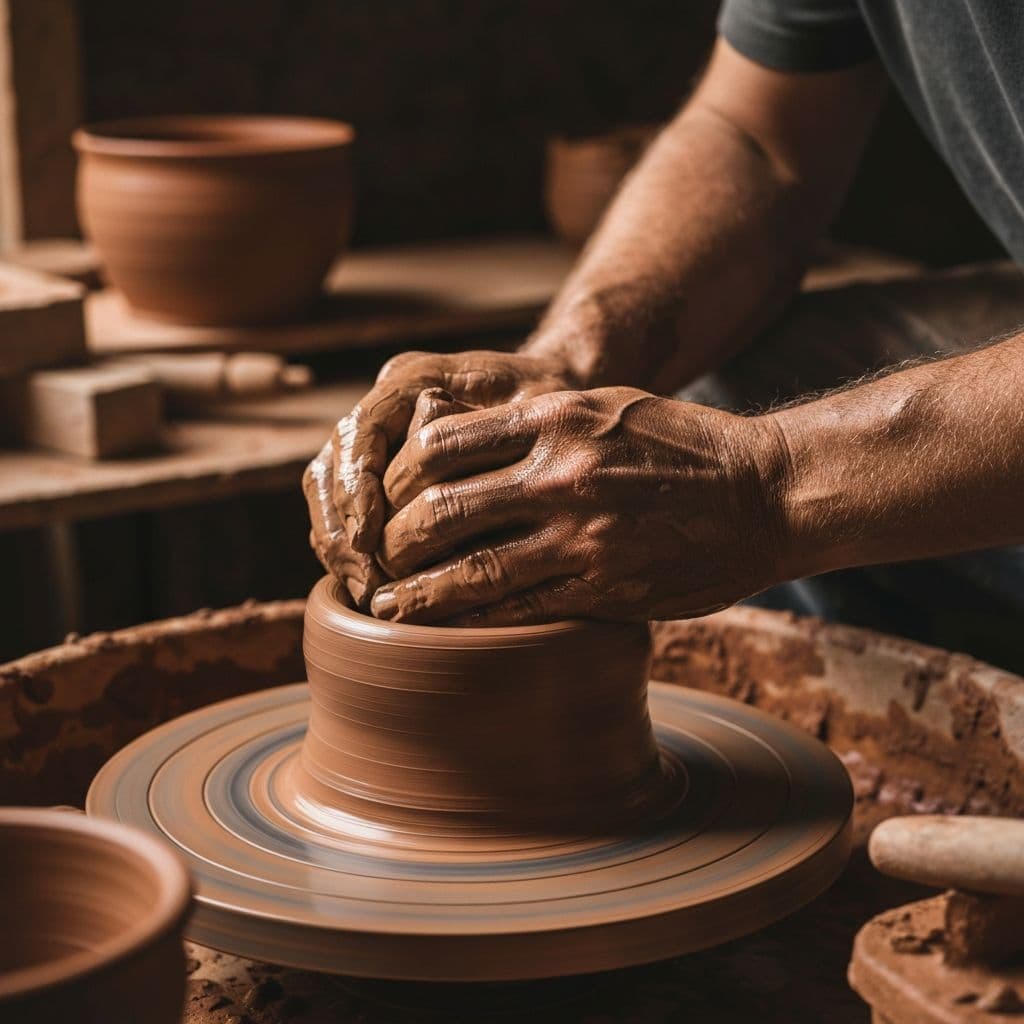
A prepared clay body is shaped by pressing, casting or throwing. After drying, pieces are commonly bisque-fired, glazed and fired again. The clay recipe, firing schedule and glaze chemistry determine the final strength, color, texture and food-contact surface.
Reactive glazes are popular because kiln heat creates controlled variation. That variation should look intentional; it does not excuse sharp edges, unstable bases, pinholes on the eating surface or damage in transit.
The practical pros and trade-offs
Stoneware’s appeal is the combination of everyday usefulness and tactile character. It usually feels warm and grounded on the table, and the material works well for casual meals and relaxed entertaining.
- Often substantial and comfortable for daily use
- Available in expressive glazes and organic shapes
- Usually heavier than porcelain
- Can chip when rims knock together or hit hard surfaces
- Safety for microwave, dishwasher, freezer and oven use is product-specific
What to check before buying
Read the care instructions instead of assuming all stoneware behaves alike. Compare actual dimensions with your cupboards and dishwasher, check whether bowls nest cleanly, and look for open-stock availability so one broken plate does not force you to replace a whole set.
- Plate diameter, rim height and usable flat area
- Bowl capacity and shape
- Finished weight of a full stack
- Glaze guidance and return policy
- Availability of individual replacement pieces
Stoneware and porcelain at a glance
| Consideration | Stoneware | Porcelain |
|---|---|---|
| Feel | Substantial and tactile | Often lighter and refined |
| Look | Organic glazes and visible variation | Crisp, bright and uniform |
| Everyday use | Excellent when care-rated for your routine | Also excellent and often versatile |
| Best fit | Relaxed, expressive tables | Minimal, classic or formal tables |
Frequently asked questions
What is stoneware dinnerware?
Stoneware dinnerware is ceramic tableware made from a dense clay body fired until it becomes strong and low-porosity. It usually feels substantial and often has a warm, organic or handcrafted look.
Is stoneware dishwasher safe?
Many glazed stoneware pieces are dishwasher safe, but the maker’s care label is the final authority. Hand washing is gentler on matte, metallic, hand-painted or crackle glazes.
Can stoneware go in the microwave?
Often yes, when the manufacturer marks it microwave safe. Do not microwave pieces with metallic decoration, and avoid sudden temperature changes that can stress the clay body or glaze.
Is stoneware oven safe?
Only use a piece in the oven when its product instructions give a temperature limit. Dinnerware and bakeware may both be stoneware, but they are not automatically interchangeable.
Is stoneware better than porcelain?
Neither is universally better. Stoneware suits people who enjoy a weightier feel and organic glazes; porcelain is often lighter, brighter and easy to use for formal as well as everyday settings.
Why do reactive glazes vary from piece to piece?
Reactive glazes can shift in color and texture as minerals respond to heat in the kiln. Controlled variation is part of the finish, but product photos and return policies are still worth checking before you buy.